November 01, 2022
Hey everyone. I'm Harj Taggar, one of the group partners at Y Combinator. Today I'm gonna talk about whether you should start a startup.
Because YC invests in startups so early, I've spent a lot of time with people who aren't yet sure if they should start a company or not. I've helped many people, including my own friends and family, think about this decision and my intended audience for this talk is anyone who doesn't feel ready to start a startup today, but thinks they may want to one day in the future.
I'm gonna break down the topic of whether you should start a startup into two parts. First, we'll talk about which types of people seem best suited to being startup founders and help you figure out if you might be one of them. Second, we'll talk about how you might best prepare yourself for becoming a startup founder in the future.
Let's start by helping you figure out if you are the kind of person who should become a startup founder or not. I really wish there were a simple test you could take that would give you a clear and correct answer to that question. I've now worked with almost a thousand startup founders as a group partner at YC, and I still get surprised by which people take to startup life like a duck to water and which ones struggle to adapt.
Now, you might find this surprising if your image of startups is based on the way famous founders are often depicted in books or movies. These depictions can make it seem that if you're not a ruthless, brilliant programmer like Mark Zuckerberg in The Social Network movie, or a charismatic product genius like Steve Jobs in one of the many books or movies about him, you probably aren't cut out to be a startup founder. Now, I can't deny that being a brilliant programmer or a charismatic product genius will certainly make it easier to be a successful startup founder. But I can say that after working with many successful founders, there are many more different types of people who succeed at startups with different strengths than just those stereotypes.
As an investor, my job is to pick which people will make great startup founders. And yet, even after 15 years of starting and investing in startups, I still get surprised by who turns out to be a great startup founder. That means it's gonna be hard for you to know for sure if you are suited to being one. You might think you could just look at how well someone has done in school or at work and assume success there will lead to success at startups. That's definitely what I thought when I first started working at YC in 2010 and began reading YC funding applications for the first time. After I started working with more startups, though, I realized that these signals mattered much less than I'd expected they would.
When you're working on a startup, you have to put in blood, sweat, and tears to convince even a single user to care about trying your product, let alone convincing the first 10 or a hundred. You have to push through a lot of rejection to get there, and because this is your startup all of that rejection feels very personal in a way it doesn't, when you're working at a fan company, building a product for someone else. It takes a lot of resilience to make it through this initial struggle to get your early users, and that's the quality I think is most important for startup founders to have.
Resilient people are suited to startups and should definitely become founders, but how do you know if you have enough resilience to be a startup founder? When I first started working at YC, I thought I could use confidence as a proxy for resilience. I'd assume that if someone projected confidence, like speaking with conviction, being high energy during our funding interviews, they were likely to be a resilient founder. The more founders I worked with though, the more I realized this was also wrong. It turned out that someone could appear very confident initially, but not be resilient when their startup hit roadblocks. Conversely, some of the quietest and least confident seeming founders at first turned out to be the most resilient founders I'd go on to work with, many, eventually taking their companies public.
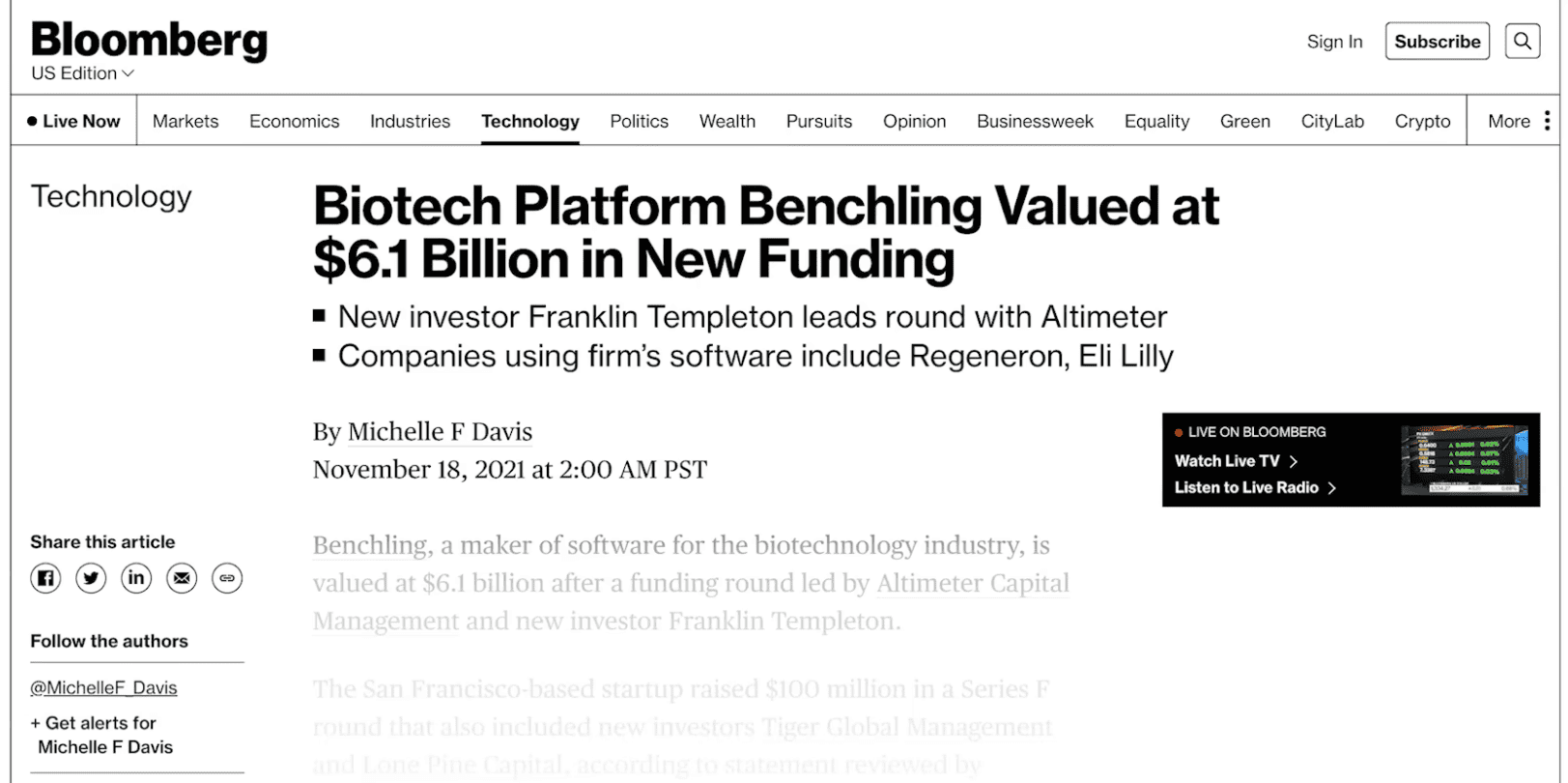
This is Sajith, the founder of Benchling. I met him when we funded Benchling in 2012. Benchling is now worth over $6 billion, and Sajith has grown into a formidable founder and CEO.

But I remember when we first interviewed him and his co-founder Cory. They were both softly spoken engineers and we were all concerned they wouldn't be suited to working on Benchling because Benchling's idea was to sell software to biotech companies and pharmaceutical companies to make money, and we weren't sure that they would be good at that kind of enterprise sales. This concern was shared by investors at demo day, who worried that they wouldn't be able to get those biotech or pharmaceutical companies to pay for the Benchling software. And Benchling struggled to raise very much seed funding at demo day. Sales did turn out to be a real struggle for Benchling.

In fact, over a year after they'd graduated from YC, Benchling was still not making any revenue, though they did have some enthusiastic grad students as free users, and the product continued getting better. It took them almost another year - that's now two years after YC - to start doing sales and making any revenue. Now, Benchling is on course to become a public company someday and has many of the world's top biotech and pharmaceutical companies as customers. Looking back, I always had confidence that Sajith was a good engineer. But I could not have predicted back when we funded him in 2012, that he would have the resilience to overcome that amount of rejection and transform himself into the leader of a company that took many years to become great at enterprise sales.
But what I haven't shared with you are the stories of many other founders who seemed equally talented at first when we first funded their companies, but turned out not to have the same amount of resilience as these founders did. I've thought a lot about how to tell the difference between people who have this kind of startup resilience and those who don't.
I've wondered if maybe having the right motivations or reasons to start a company mean you're more likely to have this special resilience. Over time, though, I've decided that this also doesn't matter as much as I had thought. I think there are many perfectly legitimate motivations to start a company.
For example, it's become popular to say that you shouldn't start a company just to make money. That's considered a somewhat flimsy motivation, but I actually think it's fine to start a startup to become rich. Startups are one of the few ways to make life changing amounts of money in a relatively short period of time.
If the desire to make money gets you started, then great. Go for it. I also think that simply being curious about what it's like to found a startup is a fine initial motivation to start one. Actually doing a startup is the only way to know for sure if you'll enjoy it. The reason I have conviction that your initial motivations don't matter so much is that I've seen motivations change over time.
I've seen founders who started out a company with a plan to sell it within a year changed their mind as they kept working with the company and are still working on that same startup a decade later, and it's now a public company. This means that your initial motivations to start a startup aren't as important as what those motivations might change into over time. In order to keep working on a startup and keep going through those dark periods that every startup experiences, you need enduring motivations, and I think the best ones are to be genuinely interested in the problem you're working on and love the people you're working with. We'll talk more about finding those later.
So instead of introspecting too much on, if you'll make a good startup founder, I'll offer some practical advice. If you are curious about what it'd be like to start a company, start by asking yourself, What do I have to lose? Now, I mean this question, not as a rhetorical one, but as a very practical one. Figure out what the worst case scenario looks like if you started a startup and decide if you can live with that. It's probably gonna take at least a year for you to have enough data to tell if the startup you're working on is promising enough to keep working on. In the worst case, you'll shut down the company without having earned much or any salary for that year. Can you live with that worst case? The calculus here is different for everyone. If you're about to graduate college, taking a year after graduating to work on a startup is not a big deal. Those job offers will still be waiting for you in a year, but if you've been a FAANG employee for the past nine years and you're in line for a big promotion this year, then maybe you stand to lose a lot by spending the next year working on a startup instead. Asking yourself if you can handle the worst case is the best way to know if you should start a startup. Be honest with yourself. If you can't actually handle the worst case, then your own constant anxiety will probably self-sabotage your startup efforts.
When you're thinking about the worst case scenario of working on a startup, you should factor something else into the equation. You will learn a lot from starting a company. I don't think enough people factor in how valuable this learning is when they're doing their worst case scenario analysis. As a startup founder, you are responsible for making everything happen, and that means you get to do lots of different types of work. You'll have to do some amount of sales, product and customer support all at once. This can be very clarifying in helping you figure out what type of work you enjoy and where you might want to focus your career, even if the startup doesn't work out. Some people start a company that doesn't work, and then they jump straight back into starting another one because they wanna learn from their mistakes. Others decide they actually really enjoy specializing in doing one thing really well, and they join a company where they can do just that. The startup experience can really improve your career opportunities, even if the startup doesn't succeed.
My second startup, Triplebyte, used software to help companies identify and hire great people. I work with hundreds of employers as they search for the best talent, and I found that many of them were explicitly looking to hire people who had previous startup experience. They believed they showed evidence of being a self-starter and being able to take initiative and lead projects. Some of the most successful YC companies have actually built their hiring processes around this knowledge.
Rippling, a $10 billion company founded by Parker Conrad, also a YC company, hires former founders and puts them in charge of entire product divisions. At YC, we often see startup founders leave their startup if it doesn't work out and go on to join a more successful YC company.
Usually we love hiring former founders to run specific product lines and, and build them and, and really run them as general managers. We've been, you know, really successful at recruiting. I think we have now probably around 50 former founders that work at Rippling.
— Connie Loizos
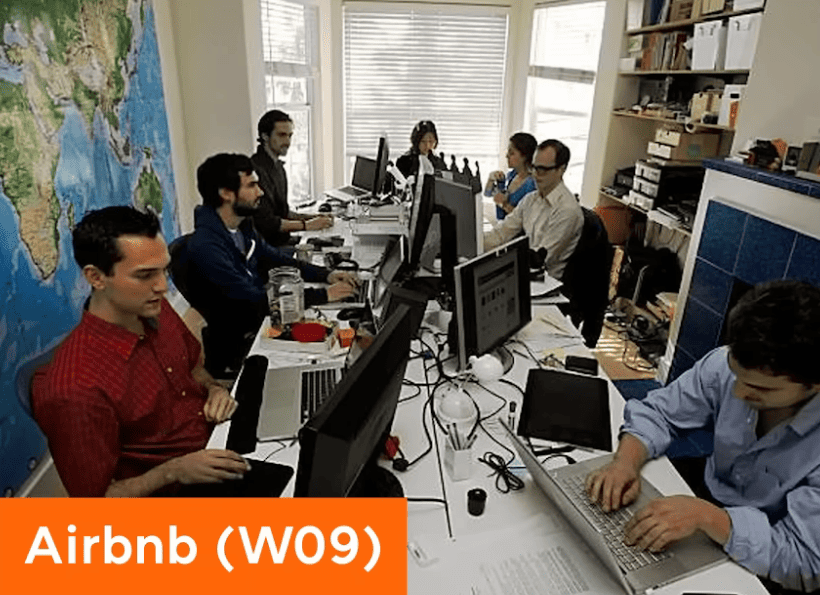
This is Nick Grandy. YC funded his first startup Wundrbar in 2008. That startup shut down, but he went on to join another YC company you may have heard of, Airbnb, as its first employee. That, of course, worked out great. After many years at Airbnb, he left to start another YC company, Outschool, which is now valued at over $3 billion.
I share these stories to show how career progressions are not always perfectly linear. Introducing some serendipity and meeting smart, ambitious people can completely transform your career, and being a startup founder is a great way to do exactly that.


Okay, so let's say you do decide you can live with the worst case of doing a startup, but you're not ready to do one right now. How can you best prepare yourself to start one in the future?
To actually start a company you'll want two things, an idea and a co-founder. Now, sometimes an idea and co-founder both come to you quickly and you're off to the races. There's lots of great startup content out there about how to start a company once you're ready, but let's talk about what to do if it'll take you some time to get to that point. I'd start by encouraging you to not think of finding ideas and co-founders as two separate tasks. It's hard to think up good ideas yourself. Also, your ideas will start out being vague and fuzzy, more like a hunch or an impulse than a clearly formed idea, and you'll go through seven iterations of fleshing it out into something more tangible and concrete. Having someone to talk through that initial idea or impulse with and debate and discuss is important, and the best person to do that with is your co-founder.
I find my best ideas come to me during conversations with smart people, so I'd start by thinking about who do you know that you enjoy talking about ideas with? In college, these are often the people you'll go to when you're stuck on a hard problem, or they're the people you most enjoy working on group assignments with. At work, these are the colleagues who you find make you the most productive and help you do your best work. I'd seek these people out and start having conversations with them about ideas or technologies that you find interesting. Talk about products you use every day that you admire or are frustrated by. Talk about technologies you think are underrated today and why. Flesh your thoughts out and debate them. Spend the time between these conversations, doing your own reading and research to learn more about the topics you find interesting. If you're a curious person, this will seem natural to you anyway.
All of this primes your mind to more easily notice and think of potential startup ideas, and it helps you get to know your friends or colleagues better as potential co-founders. If you are struggling to think of people you enjoy talking about ideas with, then you probably need to change your environment and meet some new people. If you really wanna start a company one day, it's best to choose an environment where you'll be around many people who might someday be your co-founder. I think the best environment for this is working at a startup. You both get to see how a startup works from the inside, and your colleagues will be less risk averse than the average FAANG employee.
So, if you're in college, I'd recommend finding a startup to work at after graduation, or if you're at a FAANG company now, think about leaving to join a startup as an intermediate step to starting your own someday. Once you're around smart people who you enjoy talking about ideas with, I'd recommend you start experimenting with turning these ideas into side projects. At some point during these conversations, you'll eventually say something like, "Huh, like, it'd be cool if someone built X", and that's the moment to stop and think about how you could be the one to build X. Is there a simple first version you could build over a weekend? Or can you find other people who might be users and pitch them on the idea to see how they react? Keep pulling on this thread until you've come up with a plan to turn this idea into something real, however small it is. Right now, you're not trying to launch the next unicorn. You're just getting used to the experience of turning ideas into reality and experiencing the thrill of launching something.
To turn your idea into something real, you'll need the skills to actually build them. If you're not a programmer, then either you'll need to learn how to program or find a co-founder who is a programmer. My advice, speaking from experience as someone who started his first startup without being able to code, is start learning to code. You only need to learn enough to build a version one of your ideas.
Once you're around smart people, and you're working on some side projects, how do you know when it's time to take the leap and quit your job to start a company? While it'd be great if one of your side projects started getting explosive traction and made the decision easy for you, you can't rely on that happening if you're serious about starting a company someday. Even if you launch your side projects and get some early users, the feedback you get will be mixed. It's not uncommon for the early users of any product to span the spectrum of being delighted, appalled, and indifferent towards a product.
To judge how promising your side project is as a startup idea, I'd use some advice from my Y Combinator partner, Paul Buchheit. He says that it's better to make a product that a few people really love than one a lot of people are indifferent towards. If your side project elicits a deep reaction from someone, the kind where they can legitimately say that doing something very differently as a result of your product existing, then you may be onto something. A single passionate user of a crude prototype that was hacked together on a weekend means so much more than a million signups on a waitlist for something that doesn't exist yet.
My main advice to you would be to think less about how well your side projects are going, and think more about how much you're enjoying the process of thinking up ideas and turning them into something real. Are you learning new things and finding yourself energized? Contrast this feeling with your day job. If you find your job is draining, but you have energy to work on your side projects on evenings and weekends, that's a sign it may be time to quit and work on your own ideas. Pay particular attention to how much you enjoy working with your side project collaborators. If you enjoy working with them and you both want to be startup founders, recognize how rare that is. Having a great co-founder who wants to do a startup is a fantastic reason to quit and start one.
To finish, my advice is: one, don't worry too much about your initial motivations or reasons to start a company. Those can change over time. Simply being curious about the experience of starting a startup is enough to get going. Think about the worst case scenario if you did start a company and be sure you can live with that. If you don't yet have an idea or co-founder, start looking around for smart people to talk about ideas with and launch some side projects with. Actually launch those side projects, however small, to get the experience of turning ideas into reality. And if you find someone you really enjoy working on side projects with and you both want to start a company, make the jump.
I really hope you do, and I hope we get to work together at Y Combinator someday. Thanks so much.
1Don't worry about starting motivations — curiosity is enough
2Worst case scenario analysis
3Find smart people to talk ideas with
4Turn ideas into side projects and launch them
5If you enjoy the process: make the jump!